
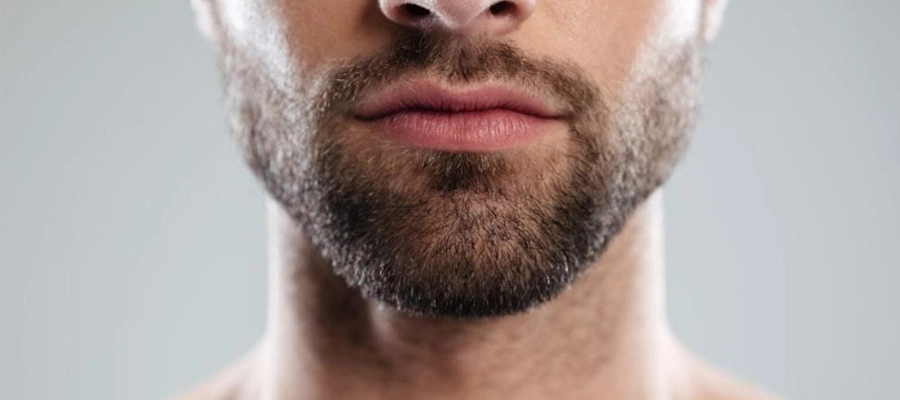
The cost of a beard transplant in Turkey depends on the number of grafts, the size of the area to be filled, your donor hair, the method and what the quote includes. Because these differ from one person to the next, there is no fixed price; your written, itemised quote is based on a review of your photos.
Below you will find who may be a candidate, the factors behind a quote, what the package for international patients covers, how to compare quotes, the stages of the procedure and a short overview of healing.
What is a beard transplant?
A beard transplant moves hair follicles from a donor area, usually the back of the head, to parts of the face where beard hair is sparse or missing. It can be planned for the cheeks, the jawline, the chin, the moustache, the goatee or the sideburns, either for one small area or for several at once. Epstein’s 2013 review of facial hair restoration describes the grafting techniques used for the beard, goatee and sideburns; in experienced hands, the aim is a result that looks natural.
The grafts are usually removed one at a time with follicular unit extraction (FUE). Each extraction point heals as a tiny scar, so the donor area is left with many small marks rather than a single line. According to the NHS, these marks are small and hard to notice, although clipping the back of the head very short makes them easier to see.
Who may be a candidate for a beard transplant?
People usually start to think about a beard transplant when their facial hair is:
- Sparse: the beard grows, but so thinly that the skin shows through.
- Patchy: there are gaps on the cheeks, chin or jawline, or between the moustache and the goatee.
- Interrupted by a scar: an old injury, a burn or an operation has left an area where hair no longer grows.
- Hard to shape: the cheek line or the sideburns are too faint to give the outline you want.
Two conditions matter as much as the look you are hoping for. First, there must be enough healthy donor hair, usually at the back of the head, to supply the grafts. Second, the reason your beard is sparse has to be assessed by a physician. Some patchy hair loss has a medical cause rather than a hereditary pattern, and the NHS points out that a transplant is generally an option for hereditary hair loss but usually not for conditions like alopecia areata. This is why the cause of the gaps is examined before any plan is made, and why a scar in the beard area is assessed on its own merits.
What affects the cost of a beard transplant?
Quotes differ because the plans behind them differ. These are the factors that usually shape the cost of a beard transplant:
| Factor | How it shapes the plan |
|---|---|
| Number of grafts | Follows from the area and the density you want |
| Area to be treated | A few gaps, one zone or a full beard |
| Donor hair | Its density decides how many grafts are available |
| Method | How grafts are extracted and placed in your case |
| Scope of the quote | What the package covers, plus any extra nights |
From photos, the number of grafts can only be estimated as a range; the examination before the procedure settles it. Our guide on how graft numbers are estimated explains the reasoning for the scalp, and the same logic of area, density and donor supply applies to the face.
The donor area deserves particular thought. Every graft moved to the face is one fewer available for the scalp, so if the hair on your head is thinning too, or may thin later, the plan has to weigh both needs together.
What does the package include?
Dr. Yetkin Bayer Clinics’ package for patients travelling from abroad brings the medical and practical parts of the stay together:
- Consultation and medical examination: an in-person look at your beard area, your donor area and your health history.
- Pre-operative tests: the routine tests carried out before surgery.
- The procedure: the beard transplant itself, under local anaesthesia.
- Three hotel nights: a place to stay while you are in Istanbul.
- Transfers and transport: to and from the airport, and between the hotel and the clinic within Istanbul.
- Medication: the medicines prescribed for you after the procedure.
- The first wash: done at the clinic, usually on day 1, 2 or 3.
Flights are not part of the package and are arranged by you. The clinic’s written quote, sent after your photos have been reviewed, names each item, which makes it easier to compare like with like. Our page on the hair transplant Turkey package sets out how a typical stay in Istanbul runs, day by day.
How should you compare beard transplant quotes?
A lower total is not the whole story. When you set quotes side by side, these points tell you more than the final figure:
- The graft range: whether each quote is based on a similar number of grafts and the same areas of the face.
- Experience and qualifications: the NHS includes these among the questions to ask, together with how many procedures the surgeon has done and how many of them had complications.
- The method and the reason for it: another NHS question is which technique is recommended for you, and why.
- Aftercare: what follow-up you can expect if a problem comes up once you are back home.
Dr. Bayer Clinics in Ulus, Istanbul, is authorised by the Turkish Ministry of Health for international health tourism (certificate ST-2237), and Dr. Yetkin Bayer is a physician and a member of the ISHRS.
How is a beard transplant carried out?
Local anaesthesia is used throughout, and you return to the hotel on the day of the procedure. These are the main stages:
- Designing the beard: the outline of the cheeks, jawline, moustache and sideburns is drawn on the skin and agreed with you, taking your face shape and your existing beard into account.
- Local anaesthesia: the donor area at the back of the head and the beard area are numbed.
- Taking the grafts: follicles are removed one by one with FUE, usually from the back of the head.
- Preparing the grafts: Epstein’s 2024 review points to single-hair and two-hair grafts, trimmed so that only a minimal amount of skin surrounds each one.
- Opening the recipient sites: in the same review, the sites are made almost flat against the skin, pointing the way the beard naturally grows, with blades as small as possible.
- Placing the grafts: each graft goes into its site, following the planned direction and density.
On the face, hairs lie close to the skin and change direction between the cheeks, the chin and the neck, which is why the angle and direction of each site matter so much for a beard that blends in. Angle matters on the scalp too, and our oblique channel technique page describes why channels in a hair transplant are angled to match the way hair grows.
The length of the session varies with the graft count and the areas treated, so ask for an estimate based on your own plan.
What is recovery like after a beard transplant?
Healing after a beard transplant goes through broadly the same stages as after a scalp transplant, with the difference that the treated area is on your face. In short:
- The first days: tiny crusts, redness and some swelling in the beard area, and a sore donor area. The NHS points out that grafts are still settling during the first fortnight, so the beard area should not be rubbed or scratched.
- The first one to two weeks: with gentle washing as instructed, most crusts come away within about seven to ten days. Keep razors off the treated skin until the clinic confirms it has healed.
- Between weeks 2 and 8: the transplanted hairs often fall out before growing back, as the NHS explains; it is a normal stage.
- From around month 3 or 4: the first new hairs appear, and the beard fills in gradually, approaching its final look at around 9 to 12 months.
If you work in an office, about a week off is often enough, although some people take a little longer because the redness is on the face. Risks come with any surgery: infection, bleeding and allergy to the anaesthetic are among those the NHS names, and it also warns that some grafts may fail to take. If pain increases, redness spreads, the skin feels hot, there is discharge or you develop a fever, call the clinic without waiting.
For more detail, our article on side effects after a hair transplant separates expected changes from warning signs, and the month-by-month recovery timeline follows regrowth after a scalp transplant, which runs along similar lines.
Planning your stay in Istanbul
Most international patients spend two or three nights in Istanbul after the procedure, which allows the first wash and a check-up to take place at the clinic before the flight home; your written plan confirms the dates.
For a quote based on your own beard, photograph the beard area from the front and from each side, add a photo of the back of your head, and send them through our consultation form for an online assessment.
Frequently asked questions
How much does a beard transplant cost in Turkey?
There is no fixed price, because the cost depends on the number of grafts, the areas treated, your donor hair, the method and what the quote includes. You receive a written, itemised quote once your photos have been reviewed.
What is included in a beard transplant package?
For international patients, it covers the consultation and examination, tests before surgery, the beard transplant itself, three hotel nights, airport and city transfers, the first wash and medication. Flights are booked separately.
Where do the grafts for a beard transplant come from?
In most cases from the back of the head, using FUE to remove the follicles individually. Your donor hair is assessed first to check that it can supply the grafts the plan needs.
Is a beard transplant suitable for everyone?
No. You need enough donor hair, and the cause of a sparse or patchy beard has to be assessed by a physician first, because some types of hair loss are not suited to a transplant.
How many nights should I plan in Istanbul for a beard transplant?
Allow two or three nights after the procedure, so that the first wash and a check-up can be done at the clinic. Three hotel nights are part of the package, and the exact dates are set in your written plan.
Sources
- Epstein JS. Facial hair in hair restoration surgery: beard transplantation and beard-to-scalp hair restoration. Facial Plastic Surgery Clinics of North America. 2024. PubMed
- Epstein J. Facial hair restoration: hair transplantation to eyebrows, beard, sideburns, and eyelashes. Facial Plastic Surgery Clinics of North America. 2013. PubMed
- NHS. Hair transplant. nhs.uk. Page last reviewed 29 September 2023. NHS website
This article is for general information only and does not replace a medical examination. Results vary from person to person; please consult your physician before any procedure.


