
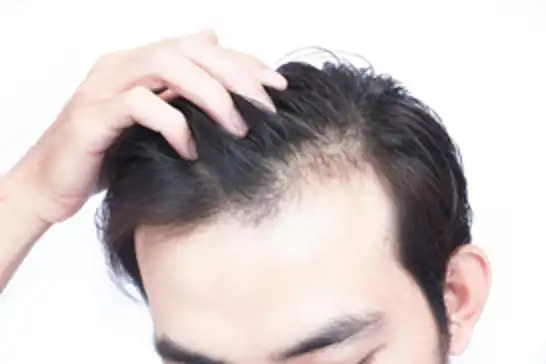
If you’re comparing FUE and DHI, you’re already asking the right kind of question—because the “better” option is rarely universal. Most people don’t actually need the most talked-about technique; they need the technique that best matches their hair loss pattern, donor capacity, scalp characteristics, styling goals, and the clinic’s day-to-day execution.
So, is FUE or DHI better? The most accurate answer is: it depends on how the clinic performs it and who you are as a candidate. In many cases, the biggest difference isn’t the label—it’s planning, graft handling, placement quality, and long-term design that still looks natural years later.
FUE And DHI: What They Actually Mean
A lot of confusion comes from the way these terms are marketed. FUE (Follicular Unit Extraction) describes the extraction method: grafts are removed individually from the donor area (usually the back and sides of the scalp) with a small punch, then implanted into thinning areas.
DHI (Direct Hair Implantation) is often presented as a separate technique, but in most modern clinics it’s best understood as a variation of FUE implantation. The extraction still commonly uses FUE-style punches. The main difference is the implantation tool: DHI typically uses an implanter pen (often called a Choi pen), which can place grafts into the scalp in a more “direct” manner.
That means the question “FUE or DHI?” is often really about implantation style and workflow, not a totally different type of surgery. Both can produce natural results when executed well, and both can look disappointing when planning or quality control is weak.
The Real Differences That Matter For Patients
When clinics discuss FUE versus DHI, they often emphasize speed, precision, or “no shaving” claims. What matters more for most patients is how these methods affect control, trauma, density planning, and consistency.
1) Incisions And Placement Workflow
With many FUE plans, recipient sites (tiny channels/slits) are created first, then grafts are placed into those sites. With DHI-style implantation, the implanter pen can create the opening and place the graft in one motion (depending on clinic protocol).
In practice, the benefit of either workflow depends on the team’s experience. A clean, consistent placement angle and direction matters more than whether the site was pre-made or created during insertion.
2) Potential Handling Time Outside The Body
Some clinics position DHI as reducing the time grafts spend outside the body. That can be a meaningful operational advantage if the workflow is tight and the team is well trained. But a disciplined FUE workflow can also minimize out-of-body time.
This is why technique names alone don’t predict results; the clinic’s graft handling protocol does.
3) Density And Naturalness
DHI is often marketed as enabling higher density or more precise placement. Sometimes it can help with control in certain zones (especially when placing between existing hairs). But high density is not automatically better if it exceeds what your blood supply and scalp can support comfortably, or if it uses donor grafts too aggressively.
Naturalness depends on hairline design, micro-irregularities, angle, and distribution—not a single tool.
4) Trauma, Swelling, And Healing Experience
Some people report differences in swelling or early redness depending on technique and operator approach, but individual healing varies widely. Many factors influence this: anesthesia use, scalp sensitivity, placement depth, incision pattern, and aftercare compliance.
It’s more reliable to evaluate a clinic’s recovery guidance and follow-up than to assume one method guarantees a smoother healing phase.
5) Cost And “Package” Claims
In many markets, DHI is priced higher. Sometimes that reflects slower, more labor-intensive implantation. Sometimes it reflects branding. Neither is inherently bad, but pricing should be interpreted through what’s included: medical oversight, planning depth, graft handling protocol, and aftercare structure—rather than the technique label alone.
When FUE May Be The Better Fit
FUE can be an excellent option when you need broader coverage and a plan that balances efficiency with natural design. It’s widely used, adaptable, and can support a range of patterns and goals—especially when the team is skilled at recipient site creation and placement quality control.
FUE may be a stronger fit in situations like these:
- Larger areas need coverage, such as extensive frontal plus mid-scalp work, where workflow efficiency and consistent graft handling become crucial.
- You want flexibility in design, because FUE workflows can be executed with different recipient site approaches that suit hairline work, mid-scalp blending, or crown strategy.
- You’re prioritizing donor preservation, and you want a plan that uses grafts responsibly across zones with a long-term view.
- Your clinic has deeper proven experience in FUE, with stable teams and a clearly documented process. (This matters more than most patients realize.)
It’s also worth noting that “FUE” is a broad umbrella. The extraction punch size, harvesting pattern, transection rate (how often follicles are damaged during removal), and graft sorting all influence the final result. A carefully executed FUE procedure can look very refined and natural.
When DHI May Be The Better Fit
DHI-style implantation can be appealing for patients who want meticulous placement control, particularly when grafts are placed among existing hair. The implanter pen approach can support precision in certain contexts—again, assuming the team is trained and consistent.
DHI may be a better fit in situations like these:
- You have diffuse thinning where the goal is to add density without fully clearing existing hair, and precise placement between native hairs is important.
- You’re focused on hairline detailing, where small placement decisions—angle, direction, and spacing—strongly affect how “soft” and natural the front looks.
- The clinic has a dedicated DHI workflow with an experienced team that uses the implanter method routinely (not occasionally).
- You’re considering minimal shaving or partial shaving, which some clinics pair with DHI workflows (though the feasibility depends on your hair type, extent of thinning, and clinic protocol).
However, DHI is not automatically “more advanced.” It can be slower, more labor-intensive, and more dependent on the operator’s consistency. If the team is inexperienced with implanter pens, precision can suffer—especially over a long procedure day.
How To Choose Between FUE And DHI In A Real Consultation
If you want a confident answer to “Is FUE or DHI better for me?”, the consultation should produce a plan that matches your case—rather than steering you to a preset package. The most useful comparison is not technique vs technique; it’s plan quality vs plan quality.
Here’s a practical decision checklist you can use (and it often reveals the right choice quickly):
- Ask Which Steps The Doctor Personally Oversees: Who designs the hairline, confirms graft distribution, and checks donor harvesting limits?
- Request A Zone-By-Zone Strategy: How many grafts are planned for hairline, frontal third, mid-scalp, and crown—and why?
- Discuss Donor Capacity And Safe Limits: What is your estimated donor availability, and how does the plan preserve future options?
- Clarify The Implantation Method And Why It’s Chosen: Is the clinic recommending DHI for a specific reason (diffuse thinning, dense packing, minimal shaving), or as a default upsell?
- Ask How The Clinic Minimizes Graft Stress: What are their protocols for hydration, storage, sorting, and time outside the body?
- Confirm The Aftercare And Follow-Up Pathway: Especially if you’re traveling, what is the schedule for check-ins, photo reviews, and clinical support?
If the clinic can’t answer these clearly, the “FUE vs DHI” debate becomes secondary. Transparency and process are the real predictors of a satisfactory experience.
The Bottom Line: “Better” Depends On Planning And Execution
So, is FUE or DHI better? Neither is universally better. DHI can offer a controlled implantation workflow that some clinics use effectively for certain patterns, especially diffuse thinning and detailed placement zones. FUE is versatile, widely practiced, and can deliver highly natural outcomes when the clinic has strong planning and graft handling discipline.
If you take one idea from this comparison, make it this: choose the clinic and the plan first, then the technique. A well-designed, conservative strategy that respects donor limits and anticipates future hair loss will usually age better than an aggressive plan—regardless of whether the grafts were placed via implanter pen or into pre-made sites.